Friday, November 20, 2009

Movies I’ve stared at recently on TCM #46 (Johnny Mercer, Tunesmith edition)

Turner Classic Movies has been devoting each Wednesday in the month of November to celebrating the genius that is songwriter Johnny Mercer with both a wonderful special (Johnny Mercer: The Dream’s on Me) and movies with songs written by Savannah’s favorite native son. This past Wednesday (November 18) was particularly noteworthy in that it was the actual centennial of Mercer’s birth, and I caught a glance at a handful of the movies shown on the channel that day. (As always, spoiler warnings apply.)

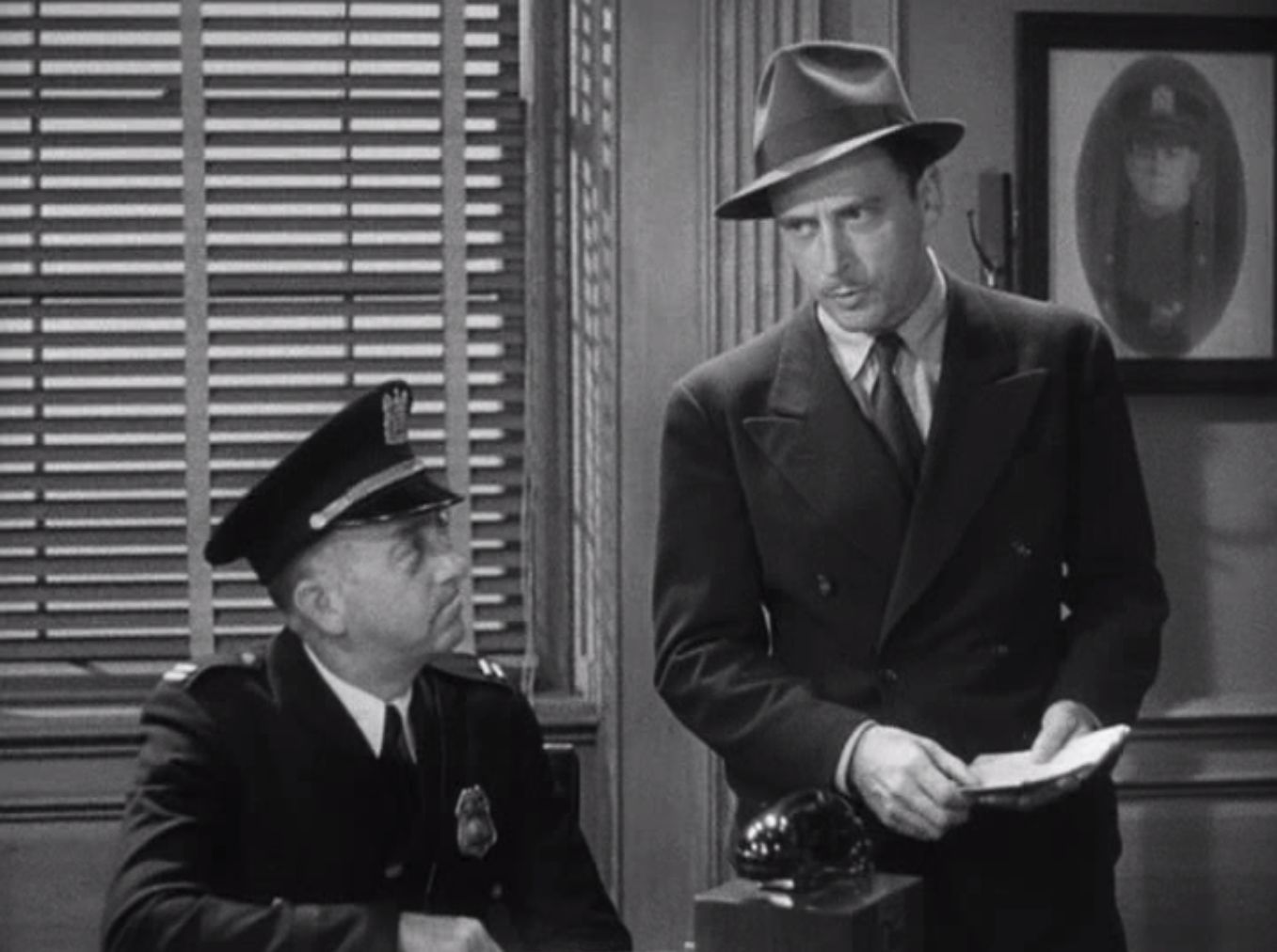
You'll Find Out (1940) – How does a film featuring three of the all-time best silver screen villains—Boris Karloff, Bela Lugosi and Peter Lorre—end up flatter than the current state of my bank account? Well, for one thing—the movie does itself no favors by teaming the trio with Kay Kyser and his Kollege of Musical Knowledge, which features such tried-and-true funny men as Ish Kabibble (Mervyn Bogue), Harry Babbitt, Sully Mason…and the Ol’ Perfessor hizzownself. Kyser and his band mates had one of the most popular radio shows on the air at the time this film was produced, and had made a successful foray into motion pictures with an amusing debut entitled That's Right - You're Wrong (1939). You’ll Find Out was the second of what would eventually be seven Kyser opuses, and already the well of inspiration has run dry.

Kyser and Kompany are hired by a young heiress named Janis Bellacrest (Helen Parrish) to play at her exclusive birthday party (Kyser’s agent, played by Dennis O’Keefe, has made the arrangements and is a bit sweet on Janis) and no sooner has the band arrived when they meet up with some interesting characters in Janis’ aunt Margo (Alma Kruger) and Judge Spencer Mainwaring (Karloff), an old friend of the Bellacrest family. Auntie Margo fancies herself an amateur spiritualist, and has attached herself to one Prince Saliano (Lugosi), whom Janis is convinced is a twenty-four karat phony. No sooner has the party gotten underway when the only bridge that connects Chez Bellacrest to the mainland explodes, leaving the band and the guests stranded…and the “old dark house” clichés begin. A third individual, a debunker of spiritualism named Professor Karl Fenninger (Lorre) has also been trapped with the guests—and Kyser and his agent ask him to help debunk Saliano’s hokum-pokum, not knowing that Fenninger isn’t quite what he seems.

The story and screenplay of Out is credited to James V. Kern (with producer-director David Butler—a film comedy veteran who helmed the likes of Doubting Thomas [1935] and Road to Morocco [1942]) and also includes this amusing credit: “Special material by Monte Brice, Andrew Bennison and R.T.M. Scott.” I suppose it’s a bit late for an audit, but I think someone should have gone over this movie with a fine-tooth comb to see where the “special material” was used—R-K-O got rooked. The only bit that I honestly laughed out loud at in this film was a sequence where Kyser and O’Keefe are stumbling around in a downstairs secret passage inside the mansion and Kay narrowly misses being hit by a sword brandished by a statue. “Benny Goodman fan,” cracks O’Keefe. Otherwise, your tolerance for Kyser and his band’s antics will depend on your tolerance for Ish Kabibble…who has a dog named “Prince” that shares the same Moe Howard haircut as his master. (Lorre, on the other hand, gets the opportunity to utter one of the best lines of his film career: “Why do I have to waste my time outwitting morons?”) OTR fans might get a kick out of seeing veteran actor Jeff Corey (addressed in the film as “Mr. Corey”) as the contestant on Kay’s show who sings My Bonnie Lies over the Ocean between mouthfuls of cake.

If there’s a saving grace in Out, it’s that the musical numbers are genuinely first-rate as performed by Kyser and his musical aggregation, including Babbitt, Mason and female vocalist Ginny Simms. I’m very fond of Like the Fella Once Said, but You’ve Got Me This Way and I’d Know You Anywhere are also fine testaments to Mercer’s (curiously billed here as “John Mercer”) songwriting talents. Mercer’s material fit Kyser like a glove, and I suppose the fact that Kay was a fellow Southerner (from Rocky Mount, NC) goes a long way in explaining this. In summation, You’ll Find Out is must viewing for any Karloff, Lugosi or Lorre fan—but it’s hardly the finest hour onscreen for any of these superb performers.

Navy Blues (1941) – A pair of conniving sailors—“Cake” O’Hara (Jack Oakie) and “Powerhouse” Bolton (Jack Haley)—find themselves flat broke on liberty in Honolulu, but devise a scheme to make some fast cash when they learn that gunnery turret champion Homer Matthews (Herbert Anderson) has been transferred to their ship…ensuring a cinch win during gunnery practice maneuvers. What O’Hara and Bolton do not know, however, is that Matthews’ hitch is up in twelve days—two days less than the actual contest—and now they’re in agua caliente because they’ve bet heavily on their ship, borrowing money from their nemesis “Buttons” Johnson (Jack Carson) and putting the ship’s previously-winning trophies in hock. In situations like this, men are forced to fall back on the women “behind successful men” and while Bolton’s ex-wife Lilibelle (Martha Raye) isn’t much use (though she has a stake in the contest—her future alimony depends on it), her pal Margie Jordan (Ann Sheridan) is enlisted to convince Homer to re-enlist and save the day for his hapless pals.

Faithful TDOY reader John recommended I catch Blues back in August of this year, and it didn’t take a lot of arm-twisting since I was curious to see the movie on the basis of the wonderful cast alone. It’s a fun little picture—nothing spectacular, and not that much different from the service comedies being made at the same time by Universal (Buck Privates, In the Navy, Keep 'Em Flying —all with Bud Abbott & Lou Costello). Both Oakie and Haley make a swell team—though I prefer Haley’s antics more because Oakie has a tendency to peg the obnoxious meter—and I really enjoyed Sheridan’s rare foray into song-and-dance (I agree with John; it’s a shame she didn’t make more movies like this); I was even surprised to see Anderson (or, as we call him here at Rancho Yesteryear, “The Man Who Would Be Henry Mitchell”) channel his inner songbird (he sings Mercer’s wonderful You’re a Natural with Annie) as well. Raye is her usual vivacious self, and there are also bring-a-smile-to-your-face appearances from Jackie “C.” Gleason (I’ll bet the Great One flipped at the opportunity of working alongside his idol, Oakie, in his film debut), Richard “Inspector Faraday” Lane, future Warner Bros. TV exec William T. Orr, John Ridgely, Ralph Byrd, Howard Da Silva (as the Shore Patrol guy who “arrests” Sheridan), Charles Drake, Tom Dugan, Edward Gargan, William Hopper, George O’Hanlon, Gig Young and Dick Wessel (you’ll have to watch quick for this last one). You may also spot a familiar face or two in the “Navy Blues Sextette”—including Kay “Nyoka” Aldridge, Marguerite Chapman and Georgia Carroll (a.k.a. Mrs. Kay Kyser).

Here Comes the Groom (1951) – Sentimental piece of “Capra-corn” stars Bing Crosby as an overseas reporter who’s determined to put a halt to girlfriend Jane Wyman’s impending nuptials—even if he has to adopt a pair of French orphans (Jacky Gencel, Beverly Washburn) to accomplish his mission. It’s not quite as easy as it sounds, because Wyman’s fiancé, played by Franchot Tone, is actually a decent sort who extends every courtesy to the Old Groaner…but Crosby quickly susses that Tone’s cousin (Alexis Smith)—fourth cousin, twice removed—has been carrying a torch for Franch and he agrees to help her land him. Will Crosby win Wyman and the day? (Come on, it’s Frank Capra we’re talking about—is there any doubt?)

Groom is one of those films that sort of runs hot and cold with me; I don’t dislike the film—particularly since it features one of my favorite Mercer tunes (with an assist from Hoagy Carmichael), the Oscar-winning In the Cool, Cool, Cool of the Evening—but revisiting it the other night I was prodded into remembering the elements of the film that I do dislike: the scenes with the orphan kids are sticky-sweet, and Crosby and Wyman’s performance of Evening doesn’t have the impact it once had (it doesn’t help that the song is “previewed” earlier on in the film as part of Crosby’s constant a cappella versions). In fact, the outstanding musical number in Groom isn’t a Mercer tune at all—it’s Misto Cristofo Columbo (written by Ray Evans and Jay Livingston, the men who brought you Que Sera Sera and the Mister Ed theme song), performed with gusto by Der Bingle and some surprise musical guests: Louis Armstrong, Dorothy Lamour, Phil Harris, Cass Daley…and Frank “Crazy Gugenheim” Fontaine.

But on the other side of the ledger, Bing and Jane make a great pair and there are sensational acting turns from Smith (Bobby Osbo and I reached a rare point of agreement when he mentioned that she practically walks off with the film…and she does), Robert Keith (as Crosby’s wisecracking editor; I love his response to Smith when she asks him if he plans to stick around: “Of course—running the newspaper is just a hobby of mine”), Connie Gilchrist, H.B. Warner, Ian Wolfe, Walter Catlett, Ellen Corby and Irving Bacon. I also enjoy the scene (I have to admit, it makes me tear up) when the blind orphan girl (Anne Maria Alberghetti) performs Verdi’s Caro Nomo for her prospective American parents—played by Minna Gombell and Alan “Fred Flintstone” Reed. You may also get a kick out of bits contributed by uncredited character greats like Charles Lane (I’m not sure if you can count his part as one of his bad guy roles or not), James “D’oh!” Finlayson, Charles Halton and Carl “Alfalfa” Switzer.

Bookmark and Share

And the Sam Johnson bacon jokes just keep coming...


The Falcon takes over

In a half-hour, Turner Classic Movies is going to treat viewers to a staggering mini-marathon of classic B-pictures featuring the famed literary sleuth created by Michael Arlen—The Falcon. The character made his debut in a short story (Gay Falcon) published in a 1940 issue of Town & Country, and soon appeared in a film with that the same title starring the silver screen’s most delightful cad, George Sanders. (I should note here that the short story’s title refers to the character—full name: Gay Stanhope Falcon—rather than the sleuth’s sexual preferences; R-K-O confused things further by changing the Falcon’s name to Gay Lawrence.)

Prior to the Falcon series, Sanders had been playing another famous detective in a series of films based on the character of Simon Templar, a.k.a. “The Saint,” created by author Leslie Charteris. Charteris had sold R-K-O the rights to his character three years earlier, at which time the first film in the Saint series, The Saint in New York (1938) was released (this film did not feature Sanders; instead, Louis Hayward played the role of Templar), but the author had since recovered the rights and because the studio and Charteris could not come to an agreement, R-K-O went ahead and started up the Falcon series. The Falcon films so successfully mimicked the Saint formula that Charteris sued the studio for plagiarism (he later took a shot at the character in his 1943 novel The Saint Steps In by having a character call The Falcon “a bargain-basement imitation”) but by 1942 it didn’t really matter much because Sanders, weary of B-films, announced he was quitting the series altogether. The decision was made to replace Sanders with his real-life brother, Tom Conway (as Tom Lawrence), as his replacement—both men appearing in The Falcon's Brother (1942) in order to make the switch. Conway appeared in nine more Falcon entries after that before R-K-O called it a wrap; the character was briefly brought back to life in a trio of mysteries starring John Calvert (as Michael Waring, the name the Falcon used on radio) and produced by the independent Falcon Pictures Company.

Except for the three Calvert films and 1946’s The Falcon's Alibi (it’s a shame TCM left this one out—it features TDOY fave Elisha Cook, Jr. as a homicidal D.J.) and The Falcon's Adventure, all of the Falcon films will be shown…and you can be sure the resident DVD recorder at Rancho Yesteryear will be working overtime to get all of them (save Gay Falcon and The Falcon Strikes Back, which I already have—this means I won’t have to get up as early and can get a breakfast break). Here’s the scheduled lineup:

6:00 AM Gay Falcon, The (1942)

A society sleuth tries to break up an insurance scam. Cast: George Sanders, Wendy Barrie, Gladys Cooper. Dir: Irving Reis. BW-67 mins, TV-G, CC

7:15 AM Date With The Falcon, A (1941)

The gentleman detective postpones his wedding to find a cache of stolen diamonds. Cast: George Sanders, Wendy Barrie, James Gleason. Dir: Irving Reis. BW-63 mins, TV-G

8:30 AM Falcon Takes Over, The (1942)

A society sleuth and a lady reporter try to track down a murderous thug's lost girlfriend. Cast: George Sanders, Lynn Bari, Ward Bond. Dir: Irving Reis. BW-63 mins, TV-G

9:45 AM Falcon's Brother, The (1942)

A gentlemanly detective calls on his brother to help him stop the Nazis from assassinating a key diplomat. Cast: George Sanders, Tom Conway, Jane Randolph. Dir: Stanley Logan. BW-63 mins, TV-G

11:00 AM Falcon Strikes Back, The (1943)

A society sleuth is framed for murder by criminals running a war-bond racket. Cast: Tom Conway, Harriet Hilliard, Edgar Kennedy. Dir: Edward Dmytryk. BW-66 mins, TV-G

12:15 PM Falcon In Danger, The (1943)

A society sleuth tracks a lost plane carrying $100,000. Cast: Tom Conway, Jean Brooks, Elaine Shepard. Dir: William Clemens. BW-70 mins, TV-G

1:30 PM Falcon And The Co-Eds, The (1944)

A society sleuth investigates murder at a girls' school. Cast: Tom Conway, Jean Brooks, Isabel Jewell. Dir: William Clemens. BW-68 mins, TV-G

2:45 PM Falcon Out West, The (1944)

A society sleuth turns cowboy to investigate a Texas murder. Cast: Tom Conway, Carole Gallagher, Barbara Hale. Dir: William Clemens. BW-64 mins,

4:00 PM Falcon In Mexico, The (1944)

A society sleuth travels South of the border to investigate an art dealer's murder. Cast: Tom Conway, Mona Maris, Martha MacVicar. Dir: William Berke. BW-70 mins, TV-G

5:15 PM Falcon In Hollywood, The (1944)

A society sleuth tours the movie capital, where he uncovers an actor's murder. Cast: Tom Conway, Barbara Hale, Sheldon Leonard. Dir: Gordon Douglas. BW-67 mins, TV-G, CC

6:30 PM Falcon In San Francisco, The (1945)

A society sleuth enlists a little girl's help in nabbing a mob of silk smugglers. Cast: Tom Conway, Rita Corday, Sharyn Moffett. Dir: Joseph H. Lewis. BW-66 mins, TV-G

Props go out to Doc Quatermass for e-mailing me this reminder, by the way.

Bookmark and Share

Thursday, November 19, 2009

Movies I’ve stared at recently on TCM #45 (De Havilland Sisters edition)

(Warning: spoilers contained herein)

Hard to Get (1938) – I had to program the DVD player to grab this one since TCM decided to show it at the same time most night auditors are eating dinner/lunch/whatever. It’s fairly standard stuff; Olivia De Havilland plays Margaret “Maggie” Richards, a pampered heiress who storms out of her family’s palatial manse in a huff (or maybe it was a minute and a huff), stops off at a gas station to refuel the valet’s automobile and finds herself with insufficient funds—prompting manager Bill Davis (Dick Powell) to seize her up as a deadbeat and ordering her to work off her debt by cleaning up the onsite bungalows (it doubles as an auto camp). The haughty Maggie, incensed at the treatment she received, decides to get revenge on Davis by dating him—passing herself off as the family maid instead of the spoiled little rich girl. (Yeah, I don’t quite get the “revenge” aspect of this film, either.) Aspiring architect Davis’ ambition is to build a chain of auto courts across the U.S., so Maggie sends him to see her blustery millionaire father (Charles Winninger)—who, in turn, fobs Davis off on his investment partner (Thurston Hall), who gives Bill “the treatment.” Bill eventually gets wise to Maggie’s ruse and tells both her and her old man off—but by this time, Dad and his partner have seen some merit to Davis’ auto camp plans and the two men vie against one another to buy his idea. And yes, after a series of misunderstandings Bill and Maggie tie the knot and (presumably) live happily ever after.

There’s nothing in Hard to Get that you haven’t already seen elsewhere but this movie benefits tremendously from first-rate casting and offbeat characterizations. As a rule, I prefer to watch Powell in movies where a black pool opens up at his feet and he dives in…but he demonstrates a nice sense of whimsy (something he put to good use on his Richard Diamond radio series) and a flair for comedy—his attempts to get in to see Hall are pretty funny (the first attempt, he’s shown to an “outer office,” which consists of a skinny ledge outside the building, a rope and a sign that informs him that the office exit is a choice of jumping or climbing down the rope), particularly when he disguises himself as a telegram messenger, window washer and charwoman. Livvy’s character is a bit hard to take at first (she was sort of typecast in her career at this point), but she gradually softens up and even gets an opportunity to clown a bit as “the maid” in a sequence where Powell’s character gets invited to dinner.

It’s the supporting cast that really shines, though—Winninger is hysterical as Livvy’s old man (“Flying buck timbers!”) who is constantly engaged in a game of one-upmanship with his valet, the marvelously deadpan Melville Cooper (towards the end of the film, when Winninger must take a traveling girder to the forty-fifth floor to talk with Powell about his auto camp idea, Cooper backs him to the hilt by remarking “I shall be watching you with great trepidation, sir”—little realizing that he, too, is going along). Penny “Blondie” Singleton is a genuine hoot as the real maid (“As the saying goes…”), who’s talked into impersonating De Havilland’s character and whose attempts at being refined and genteel are positively side-splitting (she muses about the folly about escaping the heat by vacationing by observing “You can perspire in one place as good as another”). (I especially enjoyed Powell’s assessment of Singleton’s character: “She should be parked on Edgar Bergen’s other knee.”)

Other standouts in the cast include Allen Jenkins as Powell’s sidekick and Grady Sutton as Winninger’s lackey, plus you’ll also spot familiar faces like Arthur Housman, Jimmy Conlin, Chester Clute, Irving Bacon and Granville Bates. Isabel Jeans and Bonita Granville are introduced at the beginning of the movie as Livvy’s overbearing mother and snooty sister—but for some reason they disappear during the course of the film and aren’t reintroduced until the climax…a major misstep on the part of the screenwriters, I think. With Powell in residence, I was surprised that he only sings two songs—one of which is a rendition of Sonny Boy (and for those of you put off by these things, he does “black up” like Al Jolson); but when the other is the Johnny Mercer-Harry Warren standard You Must Have Been a Beautiful Baby I guess there’s not much point in shoehorning in any additional tunes (Powell also warbles Mercer-Warren’s There’s a Sunny Side to Every Situation a cappella, too).

Born to Be Bad (1950) – The spotlight now shifts to Livvy’s equally famous sibling, Joan Fontaine, as Joanie plays Christabel Caine—a scheming manipulator and bitch-on-wheels that makes Eve Harrington look like a kindergartener. Christabel is invited to be the houseguest of Donna Foster (Joan Leslie), a woman who works for her publisher uncle John Caine (Harold Vermilyea), and has no sooner crossed the threshold when she sets her cap for Donna’s fiancé, wealthy Curtis Carey (Zachary Scott). Christabel is smart enough to have a Plan B in action—she’s also making time with aspiring novelist Nick Bradley (Robert Ryan), a man who may have an endless reservoir of writing talent but is thick as a plank when it comes to judging women (though he does remark to Christabel: “I love you so much I wish I liked you”). Christabel achieves success in busting up Donna and Curtis’ impending nuptials, marrying the millionaire herself but discovering that money doesn’t necessarily buy happiness (although I’ve always maintained you can rent it)…so she hooks up with Nick upon his return (he’s been away plugging his book) but he refuses to dally any further unless she gives Curtis the air. The problem for our nasty little heroine is that she wants to eat her cake and have it, too—but that problem is alleviated when she tells Curtis the reason why she stole away from a lodge they were vacationing at was that she was looking after her seriously-ill aunt (Virginia Farmer)…then Uncle John arrives on cue to inform her that Auntie drew her rations at the same time she was supposed to be visiting. Curtis drops her like a bad habit—but surprisingly, Christabel lands on her feet like the cat she is…walking away with a backseat crammed with furs and presumably off to spread more mischief.

Often considered a film noir by its admirers, I think Born to Be Bad is a bit sudsy to qualify for noir status but that doesn’t make it any less entertaining; well-directed by Nicholas Ray, the film’s only blemish is that it’s a tad overheated at times (the movie itself is a goldmine for parody—I think Carol Burnett even did a takeoff on this at one time on her variety show) and a bit difficult to take too seriously. Fontaine is an unrepentant bitch and seems to be having the time of her life (though she appears to have been worked on by the same hairdresser who did Ann Sheridan’s coiffure in Woman on the Run [1950]), deftly managing not to make her machinations too obvious (or it could be that the males in this movie are just unbelievably dense). Leslie does an admirable job in what is essentially a thankless role (she even disappears from the story midway, having run off to Europe after splitting with Scott) and Scott, usually cast as a cad and/or bounder, acquits himself nicely in a rare good guy part.

I have to confess, though, that I initially watched Bad for Robert Ryan—who despite his good-guy status manages to be a little menacing (particularly in his first encounter with Fontaine’s character) and a bit on the narcissistic side (“If I play my cards right, she could win me”). But it’s Mel Ferrer who steals most of the proceedings as gay artist Gabriel “Gobby” Broome, who plays the role of Fontaine’s confidant and has this priceless exchange with a guest at a ball thrown by the Careys:

FEMALE GUEST: Do you think my husband would like a picture of me hanging above the fireplace?

GOBBY: I think your husband would like you hanging anywhere.

Ferrer also has a funny line in which he explains away his hangover with “I must have got hold of a bad ice cube.”

One of the interesting facets of Bad is that while Christabel doesn’t get away with all her scheming (the censors sort of saw to that) she does manage to walk away hale and hearty and ready to plot another day—contrast this with Bette Davis’ Stanley in In This Our Life (1942) who, when it’s discovered that she was the one responsible for the hit-and-run accident that killed a child and that she tried to pin in on one of her family’s servants, cracks up her car to avoid any further repercussions. Born to Be Bad had a long history at R-K-O—it was originally slated for production in 1946 (with Henry Fonda in the Ryan role) but was cancelled only to be resurrected two years later as Bed of Roses, with Barbara Bel Geddes playing Fontaine’s part. R-K-O head Howard Hughes didn’t care much for Bel Geddes’ interpretation and insisted that Fontaine be cast (Joanie was a more bankable presence) over the objections of producer Dore Schary. (Apparently this was one of the reasons Schary jumped ship and moved to M-G-M.)

Bookmark and Share

“Hey, Rocky! Watch me pull a rabbit out of my hat!”
Although that foine broth of a boy, Inner Toob’s own Toby O’Brien, inducted the characters in his TV Crossover Hall of Fame this week, it was That Little Round-Headed Boy who reminded me that today marks the fiftieth anniversary of television’s best animated cartoon series, Rocky and his Friends (also known as The Bullwinkle Show…and other various incarnations). The irony of this statement is that while the program certainly wasn’t a yardstick for the best animation the cathode ray tube had to offer, I’ve yet to come across any series that matched Rocky and Bullwinkle for pure unadulterated hilarity and joy. The scripts, the voices, the characterizations—everything came together in this show that even today continues to entertain young and old alike.

Which, in a nutshell, is why the program still has such a dedicated fan base—as a kid, I watched the adventures of Moose and Squirrel religiously both weekdays and on Sunday mornings via ABC (it preceded a boring series entitled Make a Wish, hosted by musician Tom Chapin, and even then I knew that once the closing credits of Bullwinkle were done there were no more cartoons to be seen that morning). It mattered very little that it was poorly animated; kids rarely care about the quality of cartoons as long as there are explosions and movement. It wasn’t until later on in life that I started to get a lot of the humor on Rocky and Bullwinkle—sly, subversive and topical satire that often went over the heads of its young audience but which afforded the adult contingent a hearty chuckle. I remember a segment of Dudley Do-Right of the Mounties—one of Rocky and His Friends’ many supporting cartoons—where the impending nuptials of villainous Snidely Whiplash to his daughter Nell prompts Inspector Fenwick to remark: “I shall hate to call you ‘son,’ Whiplash…perhaps I can elongate it a bit and make it come out all right.” (I still can’t believe they got that past the censors.)

Today, my vocabulary is riddled with Rocky & Bullwinkle-isms: “Hokey smoke!”, “Sharrup you mouth!”, “That voice…where have I heard that voice?”, “Fan mail from some flounder?”, “Say the name…”, “Now there’s something you don’t see everyday, Chauncey…”/”What’s that, Edgar?” and of course, “And now here’s something we hope you really like!” TLRHB also mentions the wonderful performers on the show—narrator William Conrad, Bill Scott, June Foray, Paul Frees, Hans Conried, Walter Tetley—and gives a special nod to Edward Everett Horton, the narrator of Fractured Fairy Tales, who he remembers seeing “as a kid seeing a Fred Astaire movie on TV.” (I had the same experience myself, only it was seeing Charlie Ruggles—“Aesop” from Aesop & Son.)

The TLRHB post is a fun nostalgic read, as is a similar tribute from Mark Evanier (who takes a little time to plug the new June Foray autobiography as well). As for myself…well, I think I might take sometime later today to put on one of the Rocky & Bullwinkle DVDs put out by Classic Media (“A thunder of jets and an open sky/A streak of grey and a cheerful “Hi!”). (By the way—is Classic Media ever going to put the final season of this series on DVD? It’s like waiting for the other shoe to drop…)

Bookmark and Share

Life lessons #87

Wednesday, November 18, 2009

The Droopy of TV detectives

On Newhart, they used to have a running gag involving Tom Poston’s character of George Utley, in that the befuddled Stratford Inn handyman liked to watch reruns of Barnaby Jones in his spare time, and even was a member of good standing in Buddy Ebsen’s fan club (“Any TV schedule without Buddy Ebsen sucks eggs.”). It was a funny bit, to be certain—the Newhart people even built an episode around the concept (“Three Brothers”), in which Michael [Peter Scolari] cancels the Barnaby Jones reruns at the station—but I often wondered why they chose that particular show for George to be obsessed with. Contrary to people’s memories, Barnaby Jones was not a good-old-fashioned, folksy crime drama—no doubt considered so due to the participation of friendly Buddy Ebsen—but a fascinating study into the evil minds of some really twisted people.

The basic storyline of a Jones episode usually involved a nice, middle-class husband and wife who commit a depraved act in a temporary mindset of idiocy, and then commit blunder after blunder as the noose tightens around their necks. They’d race around like mad trying to cover up their crime…and there’s ol’ Barnaby, everywhere they go, just being his folksy, avuncular self until he had the evidence he needed to convict the hapless pair and send them to the chair. It used to remind me of Tex Avery’s Droopy cartoons, where the wolf character would literally bust his ass running away from the Droopster (usually representing the law) only to find Droopy greeting him with his typical deadpan cheer: “Hi there.” And the titles of the episodes: Indoctrination in Evil, Academy of Evil, Daughter of Evil, Band of Evil, Portrait of Evil, Image of Evil, See Some Evil, Do Some Evil—it wasn’t an installment of Barnaby Jones unless it utilized “evil” or words like “dead” (“death,” “deadly”), “kill” (“killer,” “killing”), “murder,” “terror,” “fatal,” “danger,” or “nightmare.” Don’t get me wrong here—I liked the show as much as anyone else (I always marveled at the fact that the network purposely moved the show around a lot and yet never seemed to be able to kill it because its audience followed it obediently, like Quincy, M.E.) but it sort of puts George Utley in an entirely different light, if you know what I mean.

TVShowsOnDVD.com announced yesterday that CBS DVD-Paramount will be releasing the first season of Barnaby Jones to disc on February 16th; news that is sure to make a lot of people happy since it’s been a highly-sought-after candidate for DVD-dom for quite sometime. Since the series premiered on January 28, 1973 as a mid-season replacement, Jones’ freshman season had only thirteen episodes—which I’m sure frustrated some of the suits because it kept them from engaging in their favorite practice of split-season box sets. (Perhaps I shouldn’t speak too soon—there’s always Season 2…assuming there is a season two. Read the final paragraph of this post if you’re curious as to what I mean.) Another fortuitous happenstance for the CBS-Paramount folks is that the pilot episode of Jones (“Requiem for a Son”) featured a guest appearance from another popular television shamus: Frank Cannon, played by William Conrad and at that time enjoying its sophomore year as a hit series. (Conrad would make a return visit to Barnaby Jones as the portly gumshoe in the second part of a fifth season episode, “The Deadly Conspiracy.”)

And why is this so propitious, you may be asking yourselves? Because on that very same date (February 16), CBS-Paramount is releasing Cannon: Season 2, Volume 2 to a store shelf near you—said collection containing the remaining twelve episodes of the 1972-73 season. (How indeed fortunate we are to live in a country where a show that ran for five seasons on network television can now run for twice that many on DVD!) The previously mentioned “The Deadly Conspiracy,” by the way, is a story that started out on Cannon in its fifth season (which means you’ll have to wait until the ninth box set release to see it) and concluded on Jones, with Ebsen making an appearance on Conrad’s program to start the ball rolling.

CBS-Paramount has also announced a tentative release schedule for the second season release of The Lucy Show, coming to stores July 13, 2010. (This is the season where Gale Gordon joined the ensemble as the irascible bank manager Theodore J. Mooney.) If the show continues to sell well, a third season set will be made available October 12th. The TVShows announcement of this is both troubling and amusing at the same time:

A point we failed to emphasize thoroughly with our previous report (but that our contact thought we ought to have!) is that the follow-up DVD releases are NOT guaranteed yet, just because the tentative dates are scheduled: the Season 2 set MUST have good sales numbers before CBS/Paramount will commit to releasing the third set in October (or at any other time). Our contact asked us to make that perfectly clear, and rightfully so.

I can’t wait until the ad campaign for this comes out—sort of a variation of the famous National Lampoon magazine cover (“Buy this DVD or we’ll kill this dog”). I guess the company’s slogan about putting “TV DVD on a pedestal” should be amended to “but we won’t hesitate to knock you on your ass if you don’t pay up.”

Bookmark and Share

When worlds collide #70

Tuesday, November 17, 2009

Mr. Reaper is back in business

My friend Jaime Weinman referred to the last spate of show business passings as “the war on celebrities,” and with the recent deaths of Edward Woodward, Paul Wendkos and David Lloyd it would appear that Death is not planning on taking a holiday soon.

Ken Ober, the host of the popular MTV game show Remote Control, has left us at the age of 52, expiring of yet-unknown causes. As a kid, Ober worshipped at the altar of such legendary game show M.C.’s as Bob Barker and Bob Eubanks, and achieved his goal of joining their fraternity in 1987 as the emcee of Control—a quiz program in which contestants were challenged on their knowledge of television, music and other pop culture effluvia. The series was also responsible for launching the careers of Colin Quinn and Adam Sandler (so you know Kenny’s going to be doing a stretch in Purgatory for that alone) and paved the way for other series appearances including Camp MTV, Smush and a revival of the old chestnut Make Me Laugh, which was on Comedy Central in 1997. He also enjoyed great success as a producer of comedy shows like Mind of Mencia and the Julia Louis-Dreyfus sitcom The New Adventures of Old Christine.

Classic Images’ resident book reviewer Laura Wagner posted a notice on Facebook that actor Dennis Cole also shuffled off this mortal coil Sunday at the age of 69. I’ve spotted one or two obituaries about Cole that apparently play up the fact that he was married to actress Jaclyn Smith from 1978-81 (admittedly, I, too, have joked about this in the past) but that sort of does a disservice to an individual who was a popular fixture on TV shows like Bracken’s World, Bearcats! and the daytime drama The Young and the Restless. He also appeared in numerous shows as a guest performer, including Medical Center, Police Story, Charlie’s Angels (I think that’s a gimme), The Love Boat and Fantasy Island. (Again, I mean no disrespect—but sometimes it seemed like he was on Island every week.)

But his best known television showcase was as the rookie Detective Jim Briggs on the ABC-TV crime drama Felony Squad, which had a respectable run from 1966 to 1969. A few years back, I had the opportunity to purchase some episodes of Squad from a reputable bootlegger (I am, of course, kidding about this part) and while I wanted the series because I’m both a fan of OTR veterans Howard Duff and Ben Alexander, I have to admit that Cole held his own among these two imposing performers. (This is why I cut back on the “Mr. Jaclyn Smith” jokes.)

R.I.P, Messrs. Ober and Cole. You will be sorely missed.

Bookmark and Share

One tin soldier rides away

It is with the deepest of regrets that Thrilling Days of Yesteryear must acknowledge the temporarily halt of one of its favorite weblogs, Edward Copeland on Film, which announced yesterday that it was going on “hiatus.” The term is usually used as a television euphemism for “death,” and to use it in an example sentence: “Community is going on hiatus? I sure hope you TiVoed that show, dude.”

Okay, I’m being a tad flippant here—hiatus does not always mean the death knell for a TV show…so I’m certainly not suggesting that this is the last we’ll hear from our esteemed colleague Mr. Copeland. It’s just that when a person who excels at cogent and crisp commentary on cinema, television and other subjects of this ilk is forced to take a break due to health issues, the blogosphere becomes a lonelier place—and from an area in which everyone and his brother has a blog, this is no laughing matter.

Ed asked me sometime back in April if I would consider writing an occasional essay for his blog to compensate for the times when his illness kept him on the sidelines—a request that I was a bit humbled to receive since he’s the first individual who’s ever asked me to contribute a “guest post” in the six years I’ve been flogging my blog (yes, that’s what the kids are calling it today…for the wisenheimers stampeding to the comments section). The great benefit to guest posting is that it inspires you to be a better writer—the rationale being “Well, I certainly don’t want to disappoint the host with a half-assed piece that normally I’d slap up on my blog without a second’s hesitation.” People who know me know that I can often be my own worst critic, but some of the essays I wrote for Edward—including retrospectives on White Heat (1949), North by Northwest (1959), The Twilight Zone and Monty Python’s Flying Circus—I consider to be among the best pieces I pounded out on this keyboard.

If you have a free minute, mosey on over to Ed’s and leave him a comment that lets him know you’re pulling for him to make a speedy recovery soon and that you’re marking off the days when he’ll return to the blogosphere hale and hearty. He’s an outstanding writer, and his contributions to the discussion of both classic and modern cinema will most certainly be missed.

Bookmark and Share

Life lessons #86

Monday, November 16, 2009

Movies I’ve stared at recently on TCM #44 (“Mr. Television” edition)

Turner Classic Movies ran a pair of films back-to-back last night showcasing the talents of “Uncle Miltie”—that’s right, Milton Berle hizzownself—and while I am fully aware that Mr. Berle is somewhat of an acquired taste among comedy fans, I don’t possess the animosity toward him that many of my colleagues do…though I will readily acquiesce that a little of him goes a long way. (I continue to argue that if you really want to enjoy Berle, you should check out two of the radio shows he headlined in the late 1940s: his self-titled series sponsored by Philip Morris [1947-48] and the little-known but most worthwhile Texaco Star Theater [1948-49]. Jerry Haendiges has the nearly-complete run of this series—only the broadcast of February 2, 1949 is incomplete, the second half of the show is missing—for sale and I cannot recommend it highly enough.)

Always Leave Them Laughing (1949) – Berle plays Kipling “Kip” Cooper, a third-rate comic who freely “liberates” material from other, better comedians (any resemblance to the real Milton Berle is, of course, purely coincidental) in a surprisingly good film that my Facebook pal Tom Sutpen describes as “the only Comedy ever made with 'Noir' implications.” Kip is extremely ambitious and wants to climb quickly to the top (he certainly has the ego for it) but can’t catch a break until he’s asked to fill in for veteran comedy great Eddie Eagen (Bert Lahr)—who’s suffered a heart attack on the eve of a Broadway stage hit that, in the tradition of the the-a-tah, “must go on.” Kip’s girlfriend, Fay Washburn (Ruth Roman), gets him in to see the show’s producer (Jerome Cowan) and Kip passes muster—but Eagen’s bored wife (and straight woman) Nancy (Virginia Mayo) finds Kip more to her liking than Eddie, who’s lost all appeal to the young gold-digger. When Eagen announces he’s well enough to continue with the show it looks as if Kip’s on his way back to nightclubs and juke joints—but Eagen snuffs it personally while performing a strenuous musical routine with Kip on Cooper’s last night and Nancy-bless her heart…buh-less her little heart!—offers Kip the opportunity to continue on as an Eagen knockoff. Kip realizes that copying Eddie for the rest of his life will open no further doors in his quest to hit the big time, and he gives Nancy the big kiss-off, later finding his own niches as a highly-popular television comedian.

If the storyline to Laughing sounds a tad familiar it shouldn’t be too surprising—Berle was enjoying the fruits of his success as the star of NBC’s Texaco Star Theater when Warner Bros, approached him with the idea of starring in his own feature film, curious to learn if audiences would pay to see what they could normally get for free in their living rooms every Tuesday night. As it turns out, people weren’t interested—Laughing didn’t do as well at the box office as the studio hoped, and Berle’s movie career came to a temporary standstill. But it remains a fascinating film, especially since that Berle doesn’t particularly seem to mind that his character is a bit of a louse at times (the comedian was probably satisfied with the knowledge that Kip turns over a new leaf by the film’s end) and occasionally comes on a little too strong (which is more a hallmark of Berle than the actual character). Berle gets ample opportunity to demonstrate why it was at one time necessary to be versatile in show business rather than showcase one particular talent; he’s an impressive hoofer and not-too-bad a singer—some of the musical numbers he performs with Mayo (I like You’re Too Intense) are pretty lively, and some of the supporting cast members display some impressive footwork as well.

I enjoyed seeing Alan Hale and Grace Hayes (mother of Peter Lind Hayes) as the ex-vaudevillian parents of Roman’s character, as well as Lloyd Gough (as Berle’s agent), Ransom Sherman, Iris Adrian, Wally Vernon and Max Showalter (a.k.a. Casey Adams) in support. The only blemish on this film is that Lahr’s character is a bit underused; he performs a bit of his classic “Stop in the name of the station house!” routine but I wish his character had really been fleshed out more. Truth be told, it was amazing to see both men (Lahr and Berle) work together at all; Lahr harbored an intense dislike for Berle because “The Thief of Bad Gags” had ripped off some of Lahr’s material and the comedian—best known as The Cowardly Lion in the immortal The Wizard of Oz (1939)—carried that grudge for the rest of his life.

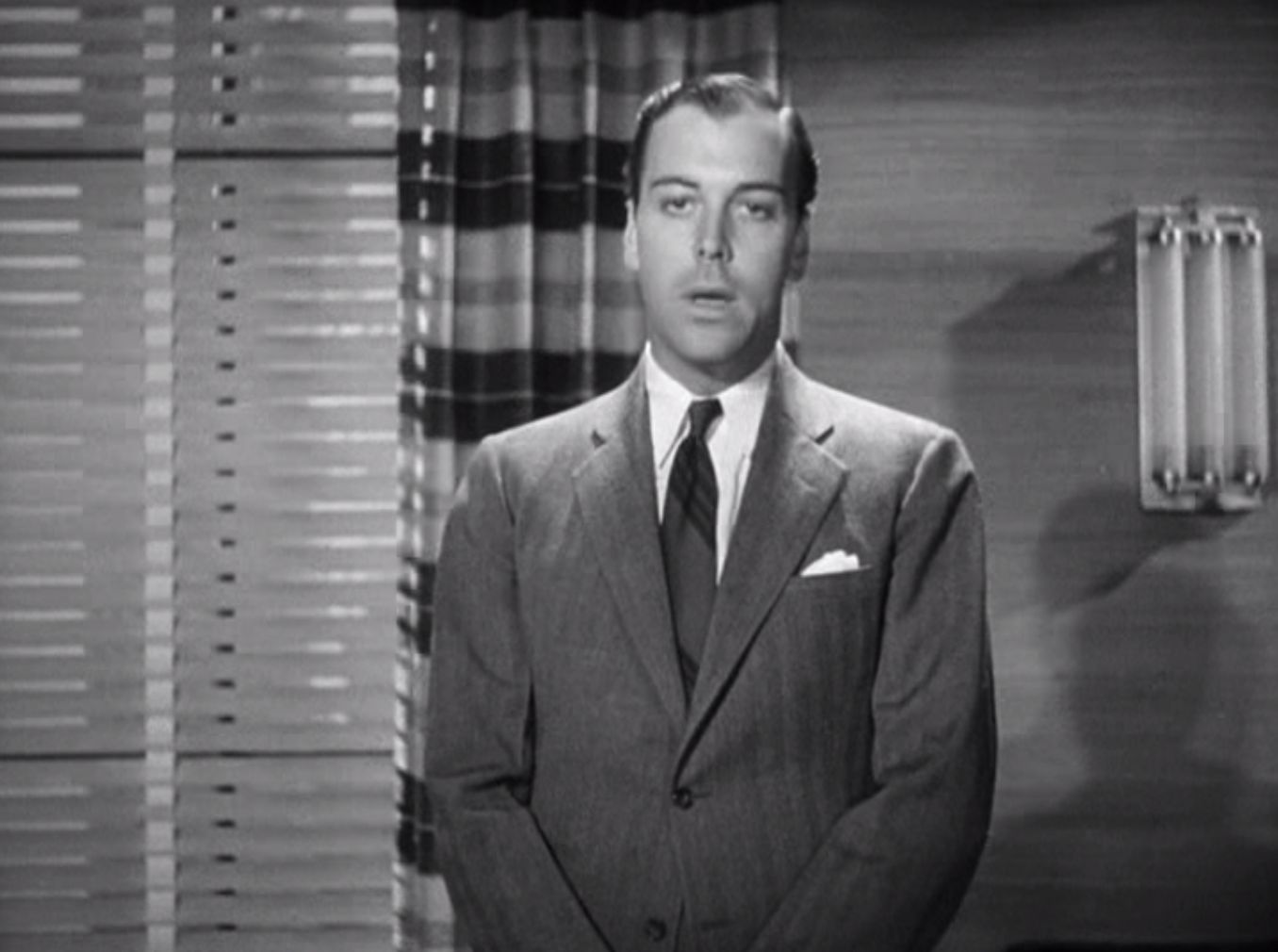
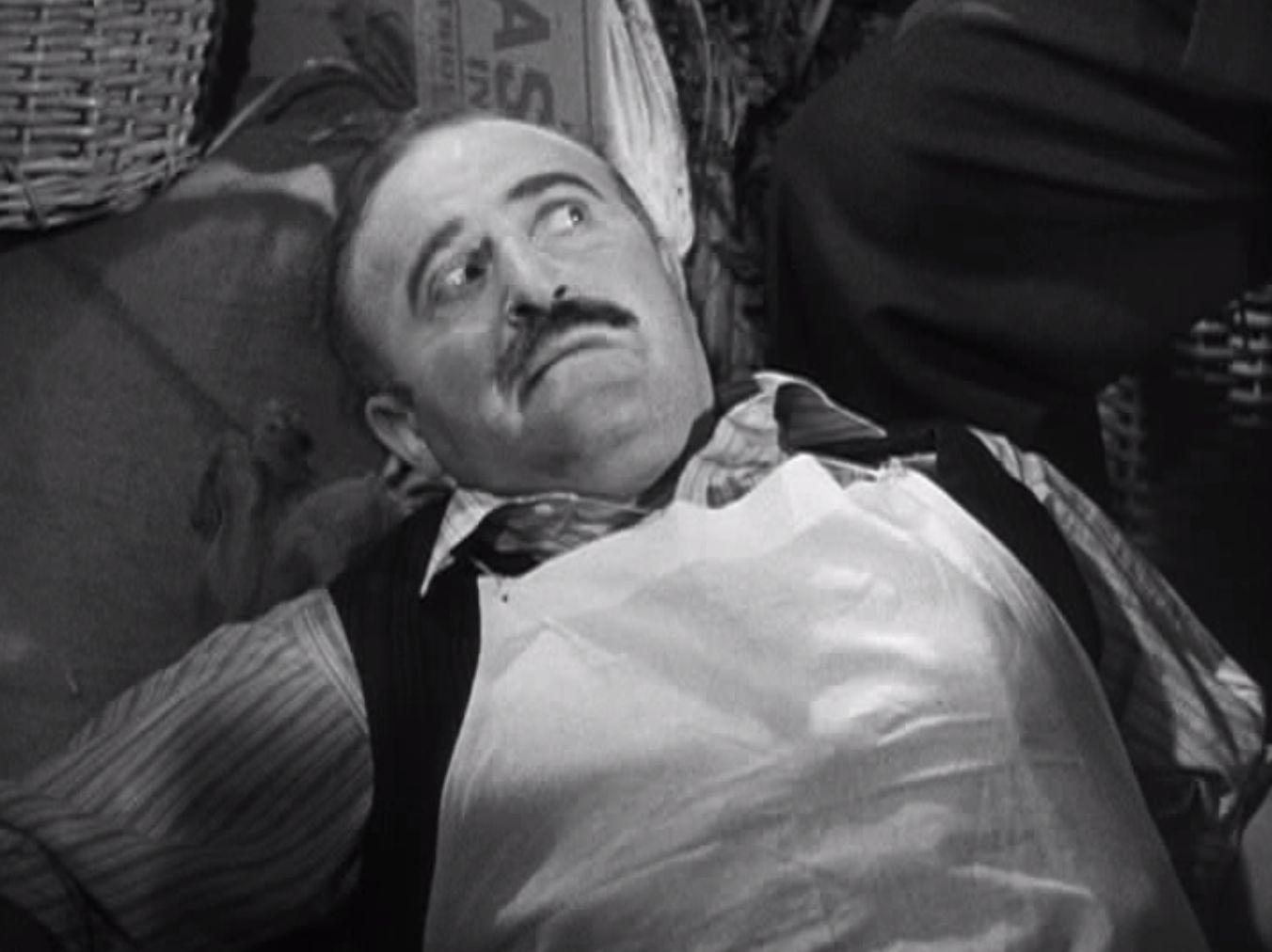
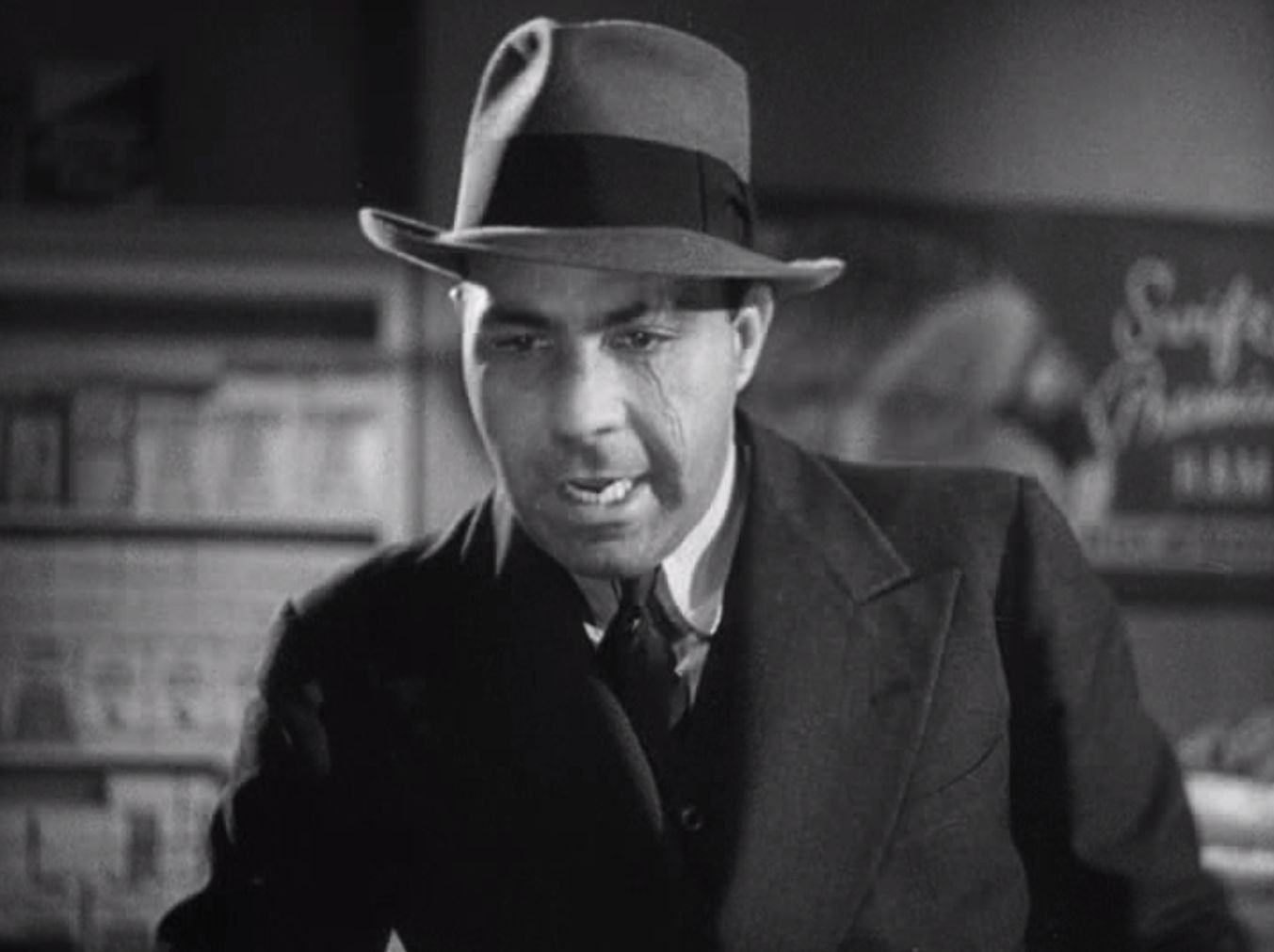
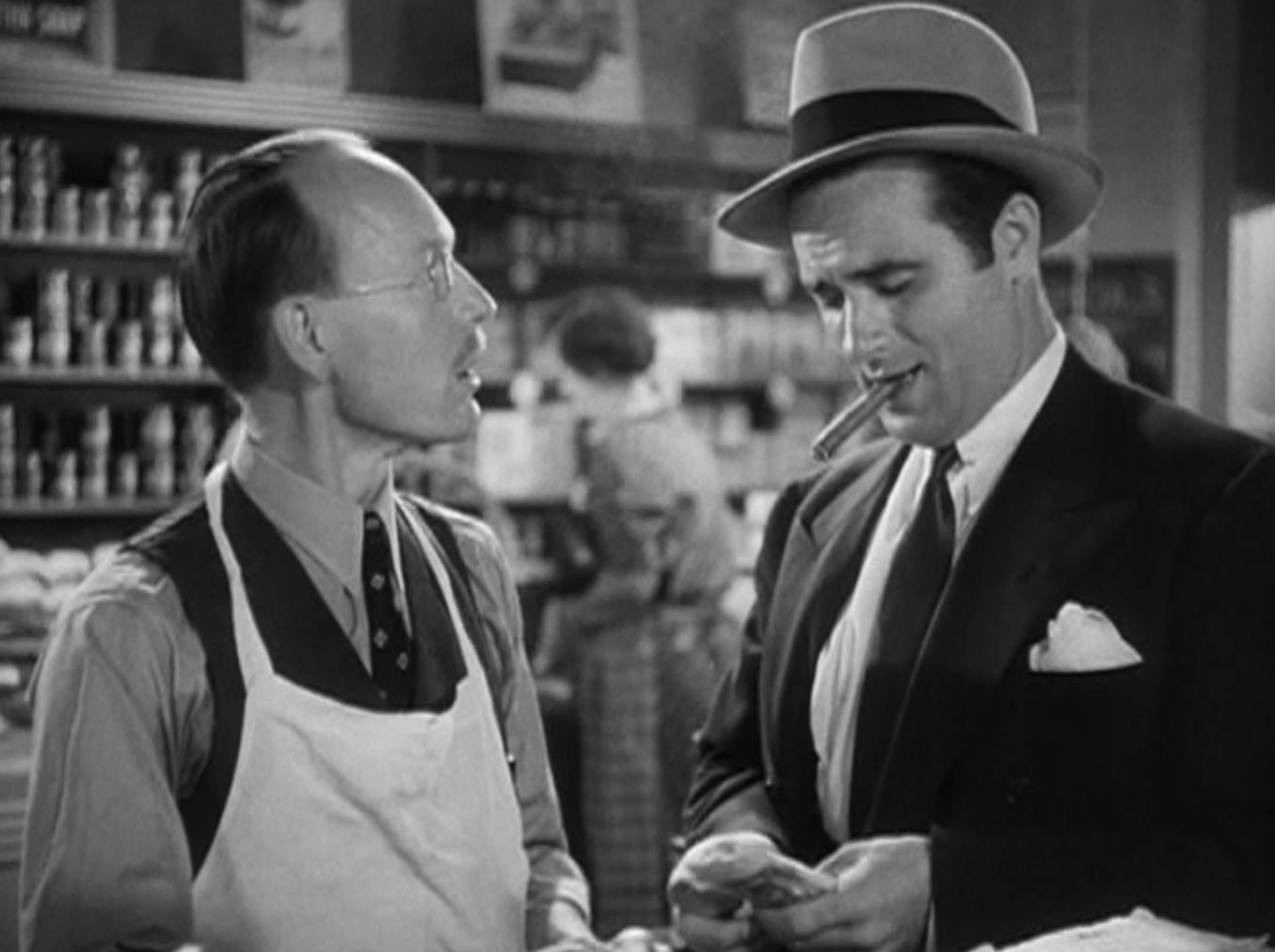
Tall, Dark and Handsome (1941) – Berle is relegated to second banana status this time around; he’s Frosty Welch, right-hand stooge to gangster “Shep” Morrison (Cesar Romero) in a funny Runyonesque comedy that pits Morrison—a thug with a vicious reputation as a killer (though he’s actually a creampuff)—up against “Pretty” Willie Williams (Sheldon Leonard), his rival who’s itching to muscle in on Shep’s territory. Shep falls for a young woman, Judy Miller (Virginia Gilmore), working in the nursery of a department store and convinces her to take a position as “governess” to his two children…which are two too many than he’s already got. With Frosty’s help, he manages to secure one kid (future Bowery Boy Stanley Clements) and a housekeeper (Charlotte Greenwood) to assist in the deception, but Judy soon finds out about the ruse and starts to give him the freeze. She doesn’t stay mad at Morrison forever, and in fact learns that his rep is a load of road apples; the men that he’s supposedly “bumped off” are actually living in comfort downstairs in a cell, including two members of Willie’s gang (Frank Jenks, Marc Lawrence). But when his “houseguests” make a break for it, Shep’s future as the top man on the Southside of Chicago looks none too bright when Willie and Company take him for a ride.

Tall, Dark and Handsome was a surprise sleeper hit for 20th Century-Fox in 1941, but in retrospect it’s difficult to see why it wouldn’t have been—it’s a breezy, entertaining comedy that’s well-cast, with swift direction by Fox journeyman H. Bruce Humberstone (who directed several of the studio’s Charlie Chan films) and an Oscar-nominated screenplay by Karl Tunberg and Darrell Ware. Romero demonstrates both a sly comic sensibility and that romantic idol beauty that made him a heartthrob; Gilmore’s irresistibly cute and Leonard is playing a role he probably could have done in his sleep. The real star here is Charlotte Greenwood, the rubber-limbed supporting comedienne whose best-known role for movie fans is that of Aunt Eller in Oklahoma! (1955); I think she’s falling-down funny in Handsome and she even gets a specialty musical number that allows her to showcase her famous high kicks. Other familiar faces in the supporting cast include Barnett Parker (as Quentin, the gat-packing butler), Paul Hurst, Anthony Caruso, Marion Martin, Leon Belasco, Charles D. Brown, Addison Richards, Stanley Blystone and Mary Treen. (If you’re quick enough, you can glimpse Bud Jamison as a bartender!)

The success of Handsome led to a sequel nine years later entitled Love That Brute (1950), which also featured Romero—only this time he played the “bad” gangster role essayed by Leonard in the original. It’s been a long while since I’ve seen the film—and I generally prefer the original over re-makes—but I remember it being just as entertaining, with a standout cast that includes Paul Douglas (in the Romero part), Jean Peters, Keenan Wynn, Joan Davis, Arthur Treacher and Jay C. Flippen (Leon Belasco is in this one, too).

Bookmark and Share

Notable passings

Greg Ferrara at Cinema Styles has written an exceptionally well-done tribute to actor Edward Woodward, who has rung down the final curtain at the age of 79. The British actor is perhaps best-known on these shores for films like The Wicker Man (1973—one of my favorite horror films) and 'Breaker' Morant (1980), as well as the popular television series The Equalizer, which ran on CBS from 1985 to 1989.

I have to confess that save Wicker Man and an episode of The Saint (“The Persistent Patriots”) I really haven’t seen much of Woodward’s work—which is surprising, since you’d think at the very least I would have bumped into at least one episode of Equalizer. The cult TV series was very similar to an earlier program Woodward had appeared on in the 1970s entitled Callan, which was popular enough to produce a feature film of the same name in 1974. His c.v. at the IMDb is quite impressive—speaking only for myself, I’m kind of curious to see Common as Muck, a comedy-drama about trash collectors on which the actor had a recurring role.

Peter Nellhaus at Coffee coffee and more coffee gave a Facebook heads-up to the passing of director Paul Wendkos, who died last Thursday at the age of 87 (though some have reported he was 84) at his home in Malibu. Wendkos was a journeyman best remembered for his contributions to the Gidget film series, holding the reins on Gidget (1959), Gidget Goes Hawaiian (1961) and Gidget Goes to Rome (1963). He directed scores of episodes for series television: among the most notable were Naked City, The Detectives Starring Robert Taylor, The Untouchables, Dr. Kildare, Ben Casey, Mr. Novak, I Spy, The Invaders and Hawaii Five-O (he directed the two-hour pilot, “Cocoon”).

Later in his career, Wendkos made directing made-for-TV movies his specialty (among his better-known projects were The Legend of Lizzie Borden [1975] and A Woman Called Moses [1978])—though it should be pointed out that he did do some interesting theatrical forays including Because They're Young (1960; with Dick Clark as a high school teacher attempting to straighten out some juvenile delinquents) and Angel Baby (1961), which stars George Hamilton as a junior-league Elmer Gantry exploiting the hell out of evangelist Mercedes McCambridge (this film also features appearances from Burt Reynolds, Joan Blondell and Henry Jones). I’ve always had a soft spot for a creepy chiller entitled The Mephisto Waltz (1971), which stars Curt Jurgens as a dying pianist who takes an interest in musician Alan Alda (again, interesting cast in this pic—Jacqueline Bisset, Barbara Parkins, Bradford Dillman, William Windom, Kathleen Widdoes and animal-protection terrorist Pamelyn Ferdin).

I’m also going to add scribe David Lloyd to this list, only because I overlooked his passing last week (Lloyd was the Emmy Award-winning writer who penned the classic Mary Tyler Moore Show episode “Chuckles Bites the Dust”); he has left us at the age of 75 after a long bout with prostate cancer. But he also left us a legacy of great comedy, having written for some of TV’s best sitcoms: The Tony Randall Show, The Bob Newhart Show, The Associates, Best of the West, Taxi, Amen…and the Tinkers-to-Evers-to-Chance of comedic half-hours: Cheers, Wings and Frasier. He also penned several episodes of the comedy-drama Lou Grant…as well as sitcom stinkers Mr. Smith (you remember this one, about the super-intelligent monkey) and Mr. Sunshine. (I think the Great Beyond will overlook these last two indiscretions—hell, I’d let him in if the only thing he had ever written was “Chuckles.”)

R.I.P. Messrs. Woodward, Wendkos and Lloyd. You will be sorely missed.

Bookmark and Share

The wonderful world of Facebook #26

Sunday, November 15, 2009

Coming soon to a TV (and radio) near you!

I have returned from a shopping excursion to Publix’s (I know Mumsy and I usually do this on Fridays, but The Singular Case of The Decrepit Water Heater sort of postponed that trip) and since the groceries have been put away, I thought I’d catch up with a few noteworthy TV-on-DVD announcements right after we hear from my sponsor, First Generation Radio Archives (now with the special ingredient…Nostalgia Ventures!):

FGRA is currently offering their classic restoration of the 1937 Yuletide-themed The Cinnamon Bear on their website, and if you’re completely stymied as to what get the littl’uns on your Christmas list, I can’t think of a better gift than this timeless serial. With a cast of old-time radio voices that includes Elliott Lewis, Hanley Stafford, Verna Felton, Frank Nelson, Howard McNear, Joseph Kearns, Gale Gordon, Elvia Allman and many others, this twenty-six chapter fairytale that dramatizes the adventures of Judy, Jimmy and Paddy O’Cinnamon and their attempt to rescue their Christmas tree’s Silver Star from the notorious Crazy Quilt Dragon. I bought a copy of this splendid production for my niece several Christmases ago and was pleased to learn that she enjoyed listening to every minute of it—I honestly didn’t think she’d go for it, what with kids’ attention spans seemingly getting shorter and shorter with each passing year. Honest to my grandma, this would make a truly memorable gift—and it’s now available in a repackaged edition with exclusive original artwork by John Mayer.

Radio Archives is also dishing up another one of their Premier Collections (technically, I don’t know if they’re still calling them “Premier Collections” but it’s hard for me to get out of the habit) in The Adventures of Philip Marlowe, Volume 2—twenty vintage broadcasts on ten CDs starring Gerald Mohr as Raymond Chandler’s famous shamus (“Get this and get it straight!”). There are loads of goodies available at the site—including FGRA’s recent Fibber McGee & Molly: The Lost Episodes, Volume 8 release—and I sure do like the snazzy new packaging on these sets. But the great thing about the Archives is you can browse to your heart’s content and pick up some sweet deals for those hard-to-buy-for individuals on your Christmas list. Why not pay them a visit—after you finish reading this post, of course.

TVShowsOnDVD.com has the official press release for The Donna Reed Show: Season 3 up, and I just happened to be glancing through it when I noticed that among the guest stars that season was Jay North…as Dennis the Menace! I was completely unaware of this cross-over, but in the September 29, 1960 telecast (“Donna Decorates”), the tiny terror of comic-book fame interferes with Donna’s attempts to redecorate Casa del Stone—forcing her to call Dennis’ next-door “good ol’” Mr. Wilson (Joseph Kearns) for advice on how to get him out of her hair. (I can hear Kearns moaning now: “Great Scott!”) I guess for the time being this is going to be as close as we’re going to get to having Dennis on DVD—the entry for this episode over at TV.com mentions that both the Stones and the Mitchells lived in the same burg (Hilldale) but I’m guessing the fact that both shows were produced by Screen Gems probably contributed more to the novelty (though I’m curious as to how CBS felt about their star attraction appearing on a rival network).

There’s been no official notification yet, but Mike J. Quigley’s MJQ.net/FiveO fan website reports that Season Eight of Hawaii Five-O will be released on March 16th of next year. (Quigley’s batting average on these release dates are pretty reliable, so I’m going to assume he knows his onions.)

In other domestic situation comedy news, Season 2 of The Patty Duke Show has an official go-ahead date—February 9th, 2010 (I still haven’t picked up Season 1 yet and probably won’t unless this pole dancing gig I’m working on yields results), and Father Knows Best’s fourth season is reportedly in the works for release sometime early next year. Both of these shows are being issued on DVD by Shout! Factory, as is Mister Ed—whose second season release will hit the streets on February 2nd. (My esteemed blogging colleague Rick “The purpose of the past“ Brooks reported on the Ed controversy a good while back, but I thought I would again bring up the unpleasant matter to demonstrate how loyal we are despite Factory’s objectionable tendencies to screw their fan base. I mean, seriously—we’re that desperate for Room 222 reruns that we settled for substandard episodes on Factory’s initial release.)

Also from Shout! Factory: season four of Adam-12 will be released February 23rd…and it just occurred to me that I don’t think I ever watched this show in primetime (I was certainly old enough); my familiarity with it has always been through reruns (which, the last time I checked, were part of WSB-DTV’s weekday lineup at 5pm; WSB-DTV being our Atlanta RTV affiliate). It would be nice, though, if Shout! Factory could see its way clear to picking up where the Universal release of Dragnet (1967-70; they stopped after one season) left off as sort of a companion to Adam-12. In other news, the Factory’s Rhoda: Season 2 release has been pushed back from its original announced date of January 26th to March 30th—speculation is that the company has filed a continuance in order to see about acquiring the full second season shows and not the cut-up syndicated prints they released on the first season set.

Finally, I just couldn’t pass this one up—it’s a series avid fans have been clamoring for and it looks as if it’s finally going to receive its DVD due: Tales of the Gold Monkey, the 1982-83 cult adventure series, is reported coming to Region 1 DVD in the spring of 2010—which will contain the original two-hour pilot and twenty hour-long episodes and a fistful of special features. I remember seeing this series when it ran briefly on ABC and got a kick out of its Raiders of the Lost Ark-type premise (though it should be pointed out that this series was on the drawing board long before Raiders’ release). I don’t know if this is one I’d rush out and grab right away but I am pleased that Monkey fans will finally see their wildest dreams fulfilled.

Bookmark and Share

Better living through blogging #7

Saturday, November 14, 2009

Thursday the 12th

I don’t consider myself a particularly superstitious individual. Black cats crossing my path, walking under ladders, throwing hats onto beds—I find most of that a load of old cobblers.

But I do believe that for certain individuals—myself included—bad luck has a tendency to follow them around like that dark cloud that used to appear over the character of Joe Btfsplk, the “jinx” in Al Capp’s Li’l Abner comic strip. And this provides the background information for why I haven’t posted anything for the past two days.

Thursday afternoon, I was catching up on doing some laundry—a critical situation at Castle Yesteryear, since I did not at the time have a stitch of clean clothing available save for some shorts I was wearing to keep me from being nude. I was working a bit on this project of Dad’s, waiting for the washer cycle to complete. I then get a phone call from my friend Deb, and as I spoke with her for about 30-45 minutes I noticed that I could still hear the water heater in operation…so I wandered out to the utility room, only to discover that the washer is done. But I can still hear the water heater running—it’s like someone was taking a shower for a long, long time.

I tried shutting the water off, and so I turned the valve to off—but the water is still running. I tried the release valve, and it’s rusted nine ways to Sunday. Deb’s husband suggests that I turn the electricity off to the water heater because by that time I’ve also noticed that it’s leaking a tiny bit underneath the apparatus (I took a towel and put it down there to “mop” up the excess). Since my knowledge of home maintenance is minimal at best, I then called Dad to see if he could suss out the problem. He doesn’t have any idea how to solve the problem. I ask him if this is something I should call the emergency maintenance number about and he responds that if there’s no visual trouble with anything I could probably wait until morning.

Later, at 10:30 pm, I get a knock at my front door and a couple of kids from the neighborhood inform me that the water I hear continually running is coming out of a pipe on the right side of my apartment. Again, I have no idea how to shut the water off—if I’ve moved the shut-off valve to where it can no longer be turned, it seems to me the water should be off. It was then I decided that this was something maintenance should take a look at. I call the emergency number and a voice message tells me to leave my name, number and location along with a brief description of the problem. They conclude by saying that if I have not heard back from anyone in a reasonable amount of time, then I should call the emergency “beeper number” and enter my phone digits so that they can get back to me.

Well, I left a message—and waited for about an hour-and-a-half. No response. So I called the “beeper number.” I know I called that number at least three times between 12 midnight and 2 am. Still no response. To hell with this, I say to myself, and I hit the hay. I got precious little sleep in those six hours, however, because as I stated previously—it was like sleeping next to the shower room all night.

About twenty-after-eight, I get a phone call that I unfortunately am not able to pick up on the fourth ring because I’m a little disoriented from the sudden wake-up. I looked at the caller I.D. and saw that someone from the rental office had called—so I dial the number back. I get the machine again, so I leave a short message telling them I’m returning their call.

The phone rings again about five minutes later. I talk with a guy who asks what the situation is and I tell him that the valve on the heater is shot and I can’t turn the water off. Ten minutes later, one of the maintenance guys shows up and I take him into the utility room. He looks at the heater and shakes his head. “That heater is older than I am,” he cracks. He then says to me: “I could fix this—but what you need is a new water heater. I’ll call the boss and have him send somebody over with one.”

The maintenance guy, I have to say, was pretty cool—although I did have to ask him where everybody was last night. He tells me that they’re usually on call until 9:00 pm and that it’s best to leave a message—and when I reply that I not only left a message but tried the “beeper number” he kind of frowns. “When I’m on duty, I make sure to check that constantly—but I wasn’t on duty last night. I honestly can’t tell you who was; he should have responded immediately in this situation.”

So in the final analysis, he guesstimated that I lost about 10,000 gallons of water due to this little mishap (the side of my yard looked as if I was growing rice paddies)—but was nice enough to let me know that all I have to do is go down to the water department and get a form to fill out which should absolve me of having to pay for all of it since the circumstances were beyond my control. (He also said that what the water department won’t take care of the rental office will.) He was also good enough to clean up the utility room floor before he left—though I’m still puzzled as to why he left the box the water heater came in on the front lawn. I briefly thought about smashing a bottle of champagne up against the heater to christen its arrival…but sometimes it’s better to leave well enough alone.

Bookmark and Share

Submitted for your approval